Polski
 English
 Deutsch
 Čeština
 Slovenčina
 Español
 Français
1/18


The range of agricultural machinery available to help maintain green spaces is growing. We can now choose how we want to mow meadows, wastelands, and green spaces, as well as what we want to do with the mowed grass.
Flail mowers have become a very attractive option for many of our customers. Some call them "special purpose" mowers, as they can easily cut even tall grass. As the name suggests, flail mowers are mowers in which the mowing function is performed by flails mounted on a cutting shaft. The cutting shaft rotates at a specific speed, cutting anything above a pre-determined height.
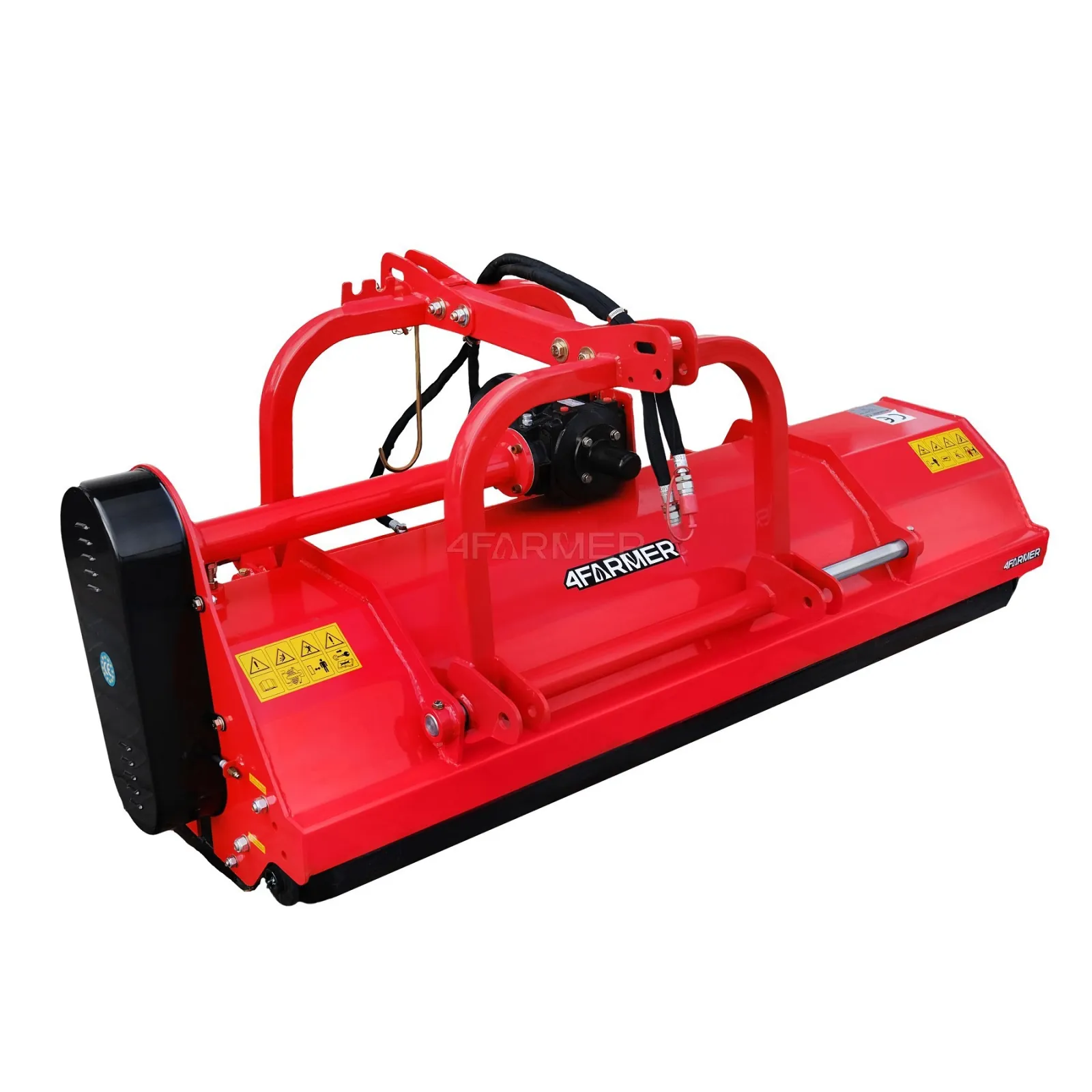
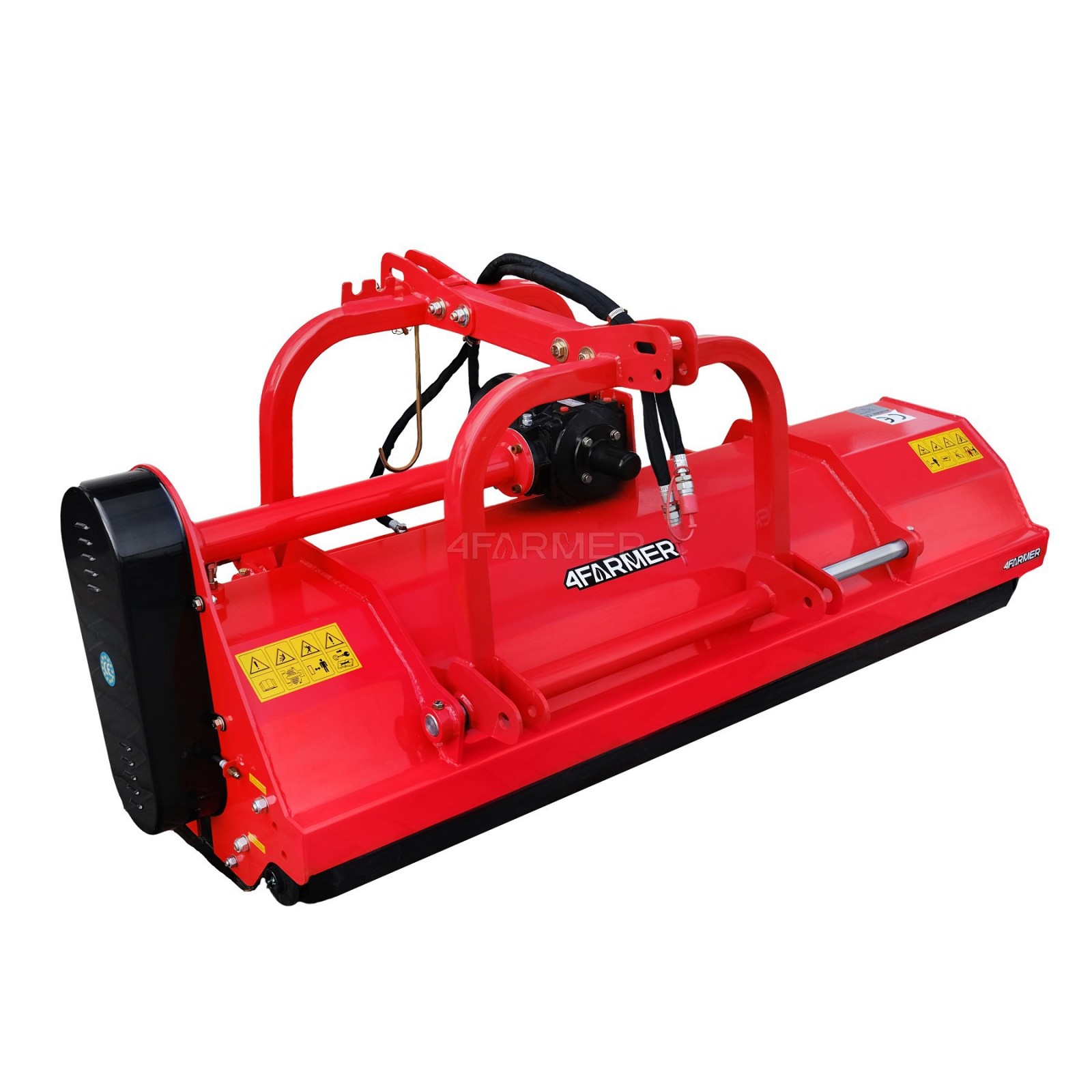
The AG 220 double-sided flail mower, commonly known as a " mulcher ," is a heavy-duty double-sided mower suitable for mowing urban green spaces, wastelands, meadows, and pastures. It's also a product that will definitely prove useful for municipal green space maintenance. A key advantage is its ability to be attached to either the front or rear of a tractor.
In what areas will this mower be used 100%?
This technique involves mowing grass and other organic materials and shredding the clippings to create a natural fertilizer that fertilizes the soil. Mulching also has the advantage of preventing soil erosion, slowing weed growth, and, importantly, eliminating unwanted grass clippings, which often pose an additional problem.
We can mulch not only grass, but also crop residues, thus reducing the amount of crop residues, providing the soil with natural fertilizer and protecting against pests that live, for example, in the stems of above-ground parts of plants.
The AG 220 flail mower (mulcher) has a cutting width of 218 cm. The mower can be mounted on either the front or rear of the tractor and also features hydraulic offset. Drive from the tractor's power take-off shaft is 540 rpm.
When choosing a flail mower, it's crucial to match the mower to the power and weight of your tractor. The AG 220 flail mower (mulcher) requires a minimum of 110 hp for a heavy tractor.
*Image for illustration purposes only, may show a different size of mower.
check_circle
check_circle

Contact us to get professional advice about this product
Phone: +48 17 858 58 58
Leave your contact details and an advisor will get in touch to help arrange the purchase.
Your enquiry has been sent. An advisor will contact you to discuss the purchase details.
Contact one of our advisors directly.
Sales advisor
+48 512 866 366 Call
Sales advisor
+48 512 866 966 Call
Sales advisor
+48 789 808 090 CallSales advisor
+48 505 771 060 Call
Sales advisor
+48 737 301 808 Call
Sales advisor
+48 737 301 809 Call