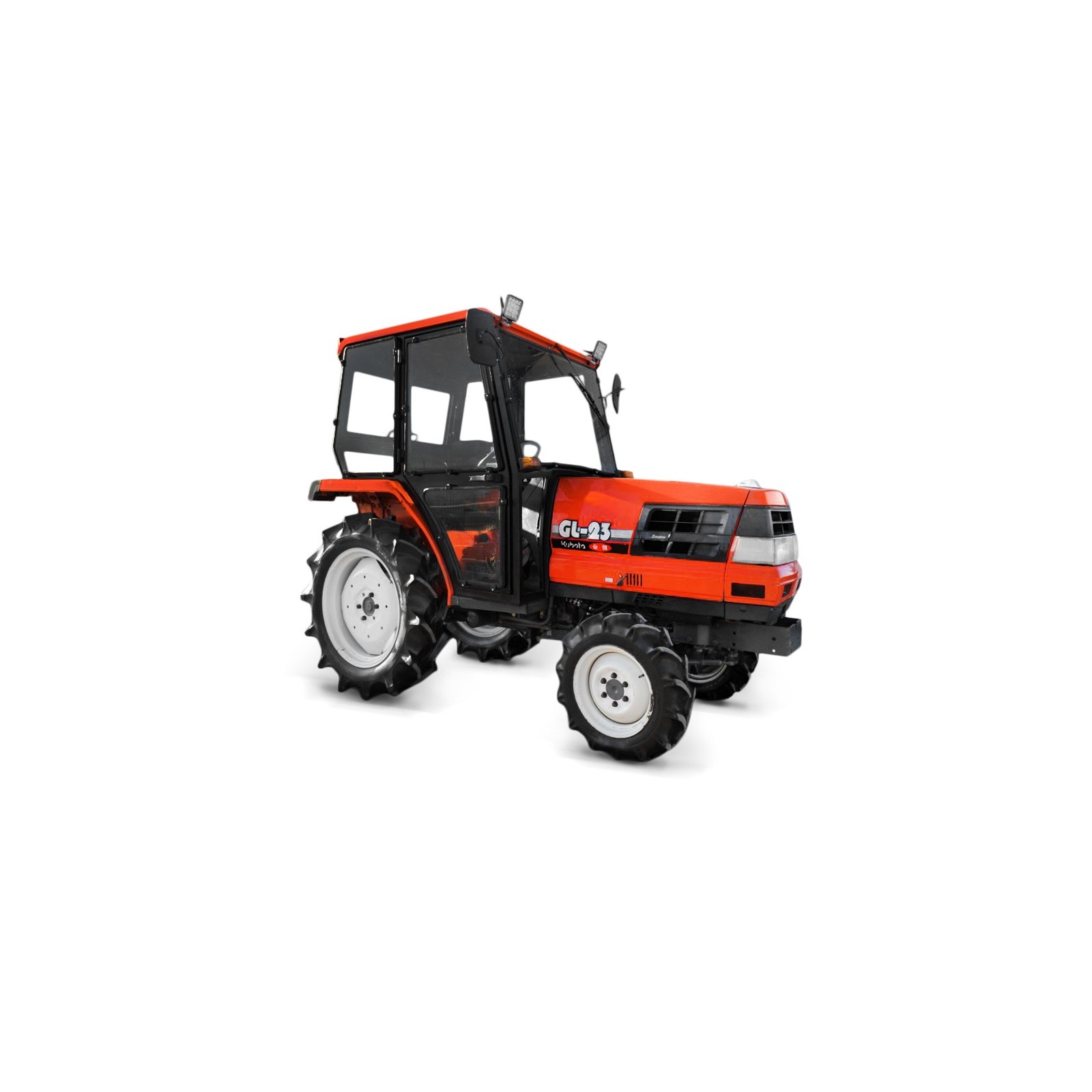
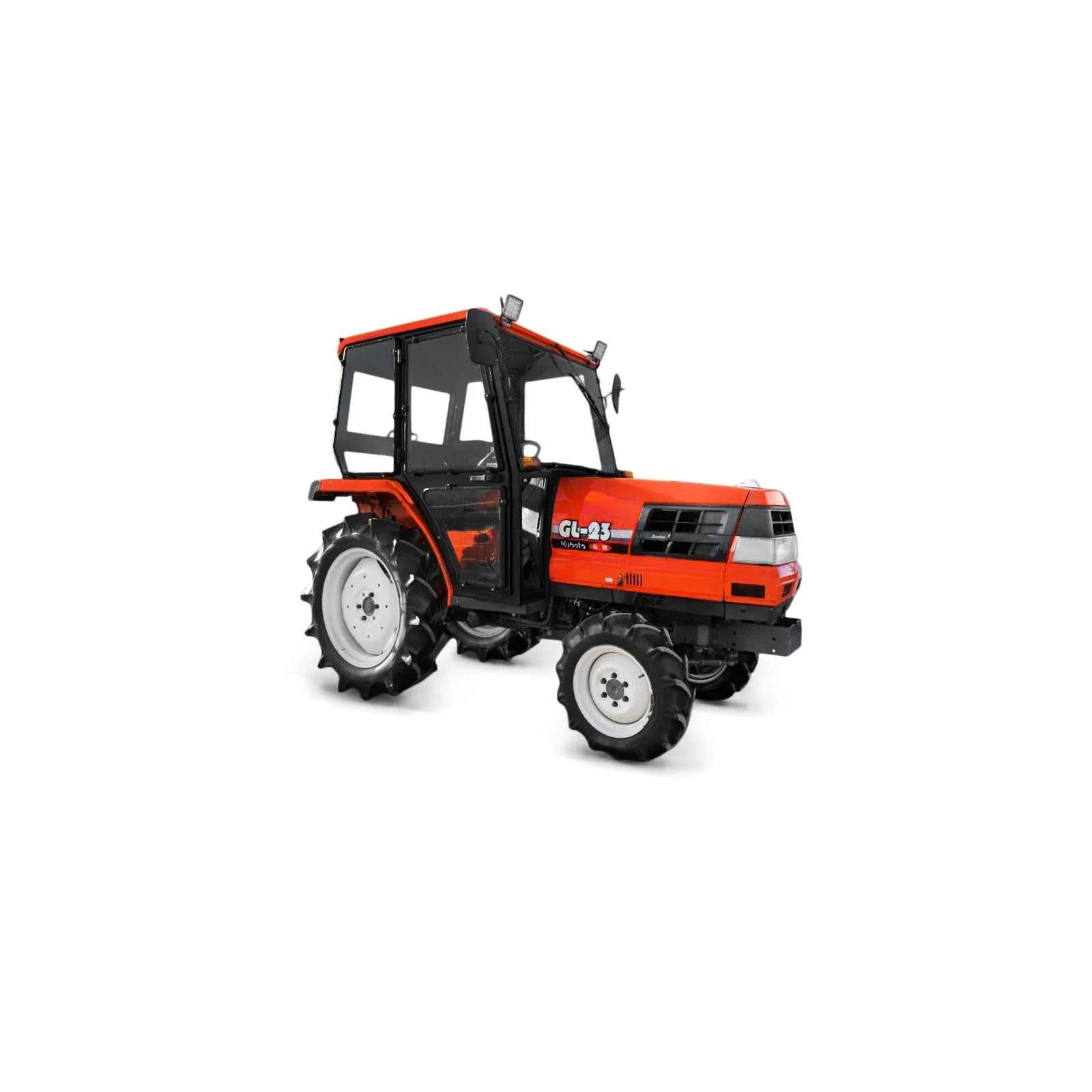
Choosing a **used Japanese mini tractor** from brands such as **Kubota**, **Yanmar**, or **Iseki** is an excellent investment for those seeking reliable equipment at an affordable price. Japanese manufacturers are famous for their precision of workmanship and the use of extremely durable materials, which means that even a dozen-year-old **compact tractor** maintains full mechanical efficiency. The key element here is the legendary **Diesel engine**, which is characterized by high work culture, low fuel consumption, and enormous service life, often exceeding several thousand engine hours without serious repairs. Additionally, these machines have **4x4 drive**, which in combination with their low weight allows for work in difficult terrain where large tractors could get stuck. **Compact dimensions** facilitate maneuvering in orchards, gardens, or tight farm buildings. By buying used equipment, we receive a machine with professional parameters that holds its market value much better than new, budget models of other brands. It is an ideal solution for auxiliary farms, municipal companies, and gardening enthusiasts.
Czy mini traktor jest łatwy w obsłudze?
Tomasz
• 11.07.2024
Adam Kowalski
– Ekspert Traktor.com.pl
• 11.07.2024
Tak, większość mini traktorów ma prostą obsługę i intuicyjne sterowanie. Nowoczesne modele wyposażone są w hydrostatyczną skrzynię biegów, co eliminuje potrzebę ręcznego zmieniania biegów. Ergonomiczne stanowisko operatora, czytelne wskaźniki i łatwo dostępne elementy sterowania sprawiają, że nawet osoby bez doświadczenia szybko uczą się obsługi.
What are the advantages of 4x4 drive in small agricultural tractors?
**4x4 drive** in Japanese **mini tractors** is a feature that radically changes the machine's capabilities, especially in demanding field conditions. By transferring power to all four wheels, the tractor gains significantly better traction, which is crucial when working with heavy equipment such as a **front-end loader** or **snow plow**. In models of brands like **Mitsubishi** or **Shibaura**, 4WD systems are designed to minimize wheel slip, which protects the soil structure and reduces tire wear. Additionally, **four-wheel drive** allows for safe movement on sloping terrain, where standard machines with single-axle drive could lose control. In Japanese designs, this drive is often supported by a **differential lock**, which increases off-road capability in extreme situations. For the user, this means greater work efficiency, lower risk of getting stuck, and a longer life for the entire **drivetrain**, which is not overloaded by wheel spin. This is the standard that determines the versatility of multi-purpose machines.